Mature Skin Care Routine: A Step-by-Step Guide for Women Over 40
Your skin doesn't just 'get older' after 40 — it renegotiates the whole contract. Here's the exact AM/PM routine, ingredient cheat sheet, and one often-skipped step that actually gets your products to work harder.


Here's the thing nobody tells you at your 40th birthday party: your skin doesn't just "get older." It renegotiates the entire contract. The moisturizer that worked in your 30s? Suddenly it's not enough. The five-minute routine you used to swear by? It's basically doing nothing now. And if you've been standing in the skincare aisle lately feeling like you need a translator just to read the labels — retinol, peptides, niacinamide, what even is a ceramide — you are so far from alone.
I get it. Skin in your 40s is a different animal, and it deserves a different game plan. So let's build you one, step by step, no PhD in dermatology required.
Why Your Skin Changes After 40 (And What's Actually Happening)
Around this age, your body starts producing about 1% less collagen every single year. That doesn't sound like much until you realize it's been compounding since your mid-20s. Add in hormonal shifts from perimenopause, slower cell turnover, and skin that just doesn't hold onto moisture the way it used to, and you've got the perfect storm for fine lines, dullness, and that "why does my skin look tired even when I'm not" feeling.
The good news? Your skin isn't broken. It just needs a routine that actually matches what it's going through right now — not the routine you inherited from a magazine in 2004.
The Step-by-Step Morning Routine for Mature Skin
Mornings are about protection. Think of it as suiting up your skin before it heads out into the world.
- Gentle cleanse. Skip anything foaming or stripping. A cream or gel cleanser removes overnight buildup without wrecking your skin barrier — which, after 40, is already working overtime.
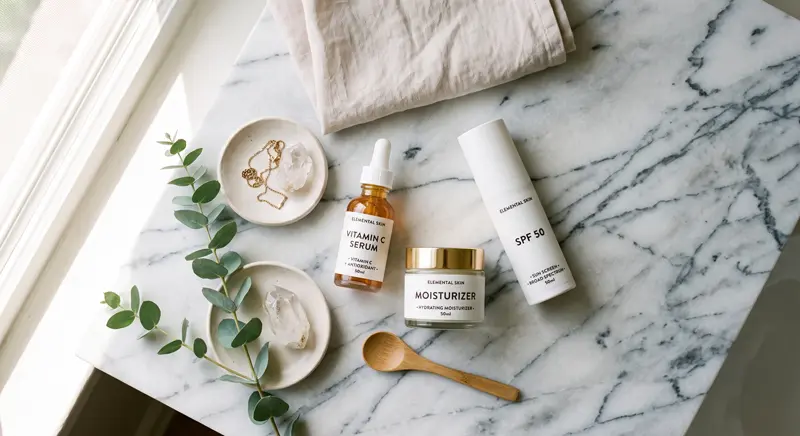
- Antioxidant serum. A vitamin C serum brightens, fights free radical damage, and gives your skincare a fighting chance against pollution and sun exposure. Apply it while skin is slightly damp for better absorption.
- Hydrating moisturizer. Look for hyaluronic acid and ceramides. Mature skin loses water fast, so this step isn't optional — it's foundational.
- SPF 30 or higher. Every. Single. Day. I cannot stress this enough — sunscreen is the single most effective anti-aging product that exists, full stop. No serum on earth outworks consistent SPF.
The Step-by-Step Nighttime Routine (Where the Real Magic Happens)
If mornings are about defense, nights are about repair. This is when your skin actually does its rebuilding work — so don't skip it just because you're exhausted. (I know. Trust me, I know.)
- Double cleanse. Oil-based cleanser first to break down makeup and SPF, then a gentle water-based cleanser to finish the job.
- Retinoid. This is the single most research-backed ingredient for mature skin — it speeds up cell turnover, boosts collagen, and softens fine lines over time. Start slow (two to three nights a week) if you're new to it, since it can be irritating at first.
- Targeted treatment. Peptides or a hydrating essence layered under moisturizer, depending on what your skin is asking for that week.
- Rich night cream. Heavier than your daytime formula, designed to lock in moisture while you sleep.
- Eye cream. The skin around your eyes is thinner and shows age first — don't skip it, even when you're running on fumes.
Your Mature Skin Ingredient Cheat Sheet
| Ingredient | What It Actually Does | Look For It In |
|---|---|---|
| Retinol/Retinoid | Boosts collagen, speeds cell turnover, softens lines | Night serums, creams |
| Hyaluronic Acid | Pulls moisture into skin, plumps fine lines | Serums, moisturizers |
| Vitamin C | Brightens, fights free radical damage | AM serums |
| Peptides | Signals skin to produce more collagen | Serums, eye creams |
| Niacinamide | Evens tone, strengthens skin barrier | Serums, moisturizers |
| Ceramides | Restores and protects the skin barrier | Moisturizers |
| SPF 30+ | Prevents future damage — non-negotiable | Every AM moisturizer |
5 Mistakes Even Smart Women Make With Their Skin After 40
- Skipping SPF on cloudy days. UV rays don't care about clouds. Neither should your skincare routine.
- Using products meant for oily, 20-something skin. What worked at 25 can actively dry out mature skin at 45.
- Over-exfoliating. Mature skin has a more fragile barrier — scrubbing it into submission backfires fast.
- Chasing trends instead of consistency. The "it" ingredient of the week matters less than showing up with your routine every day.
- Letting good products sit on the surface instead of actually sinking in. More on this below — it's the step almost nobody's routine accounts for.
The One Step Most Mature Skincare Routines Are Missing
Here's an honest truth: you can buy the best vitamin C serum, the priciest peptide cream, and a retinol that costs more than your electric bill — and still not see the results you're expecting. Why? Because topical skincare has a ceiling. On its own, a cream or serum applied to the surface of your skin only gets a fraction of its active ingredients where they actually need to go.
That's the exact problem micro-infusion technology was built to solve — and it's the reason dermatology clinics have charged $300 to $500 a session for it for years. The concept is simple: create tiny, temporary micro-channels on the skin's surface so your serums can actually penetrate deeper instead of just sitting on top, evaporating, or rubbing off on your pillowcase.
The Glamory MicroLift System brings that same clinic-grade concept home. It's a handheld roller with ultra-fine, 24K gold-plated needles (0.5mm — thinner than a human hair) that glides across your skin in about five minutes, paired with serum vials formulated specifically for micro-infusion delivery. A few things worth knowing if you're already dialing in a serious skincare routine:
- Boosts serum absorption by helping active ingredients get deeper than topical application alone
- Formulated with ingredients already on your cheat sheet above — niacinamide, a penetrating form of hyaluronic acid, and a peptide duo (acetyl tetrapeptide-9 & 11) for firmness
- Just 5 minutes at home, starting at roughly every two weeks and building up to weekly use
- Widely described as gentle — most users report a mild tingling rather than pain
- Comes with a 30-day money-back guarantee, so you can test it without much risk
A quick heads-up if you're building this into your existing routine: skip retinol or acid-based products for 24 hours before and after a micro-infusion treatment, and avoid it on active breakouts or irritated skin, per the brand's usage guidelines. Think of it as an occasional power move layered into the routine you already have — not a replacement for your daily basics.
Mature Skin & Confidence: What's Actually Worth the Investment
| Category | What to Look For | Typical Investment |
|---|---|---|
| Vitamin C Serum | Stable, well-formulated brightening serum | $25–$70 |
| Retinol Treatment | Dermatologist-recommended strength for your skin | $20–$90 |
| SPF Moisturizer | Broad-spectrum SPF 30+, daily wear | $15–$45 |
| Professional Facial | Monthly or quarterly deep treatment | $75–$200/visit |
| At-Home Micro-Infusion | Glamory MicroLift starter kit vs. $300–$500 clinic sessions | From $36.00 |

Frequently Asked Questions About Mature Skin Care
What is the best skincare routine for women over 40? A routine built around consistent SPF, a retinoid at night, hydrating ingredients like hyaluronic acid and ceramides, and antioxidants like vitamin C in the morning. Consistency matters more than any single "miracle" product.
Do I really need retinol after 40? It's one of the most researched anti-aging ingredients available and directly supports collagen production, so yes — it earns its spot in a mature skincare routine, even if you introduce it slowly.
How can I look more youthful without Botox or fillers? A strong skincare routine, daily SPF, good sleep, hydration, and tools that help your existing products actually absorb — like at-home micro-infusion — can all move the needle without a needle in the injectable sense.
What natural remedies actually help aging skin? Things like facial massage, staying hydrated, and antioxidant-rich foods support skin health, but they work best alongside — not instead of — proven ingredients like retinol and SPF.
Is at-home micro-infusion safe, and how is it different from a clinic treatment? At-home systems like Glamory's MicroLift use very short needles (0.5mm) designed for surface-level micro-channeling rather than the deeper penetration used in some clinical treatments, and the brand recommends avoiding use on active breakouts, irritated, or sunburned skin. As with any at-home device, check with a dermatologist first if you have a skin condition like rosacea or eczema.
Is it too late to start an anti-aging routine at 40 or later? Not even close. Skin can improve at any age with the right consistent habits — the best time to start is always now.
The Bottom Line
Aging well after 40 isn't about chasing youth — it's about looking in the mirror and feeling genuinely good about what you see. A solid skincare routine gets you most of the way there. But even the best products have a ceiling if they're not actually absorbing the way they should.
Build the routine. Protect your skin daily. And if you're ready to get more out of the serums already sitting in your cabinet, an at-home micro-infusion tool might be the missing step.