How to Close Small Gaps Between Teeth (And What to Do While You Decide)
Small gaps between teeth? Learn what causes them, your real treatment options, and how to feel confident in your smile starting today.


You've probably thought about it in at least one photo. Maybe you covered your mouth a little, or kept your smile closed because the gap just kind of… caught your eye in the preview. Or maybe you genuinely love your gap and just want to understand your options. Either way, you're not alone, and more importantly, you're not stuck.
Small gaps between teeth are incredibly common. Celebrities have made them iconic. Dentists will tell you they're rarely a health concern. And the treatment options in 2024 range from "done in one afternoon" to "completely unnoticeable over 8 months", depending on what you actually want.
Here's everything you need to know to make a smart, informed decision. And a confidence tip for right now while you decide.
What Actually Causes Small Gaps Between Teeth?
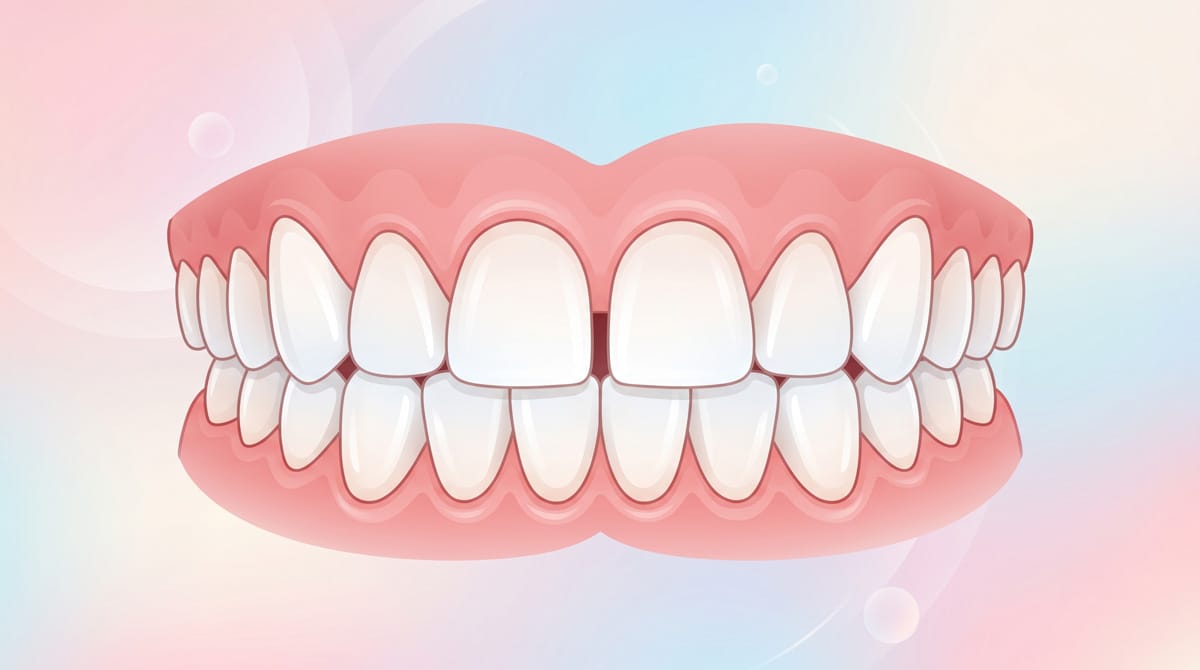
First, some quick reassurance. A gap between your teeth, medically called a diastema, is not a sign that something went wrong. It's usually just genetics.
The most common causes:
- Jaw-to-tooth size mismatch — your jaw has more room than your teeth fill. Completely natural.
- An oversized labial frenum — that's the small flap of tissue connecting your upper lip to your gums. If it's large, it can push front teeth apart.
- Childhood habits — thumb-sucking or tongue thrusting can shift teeth over time.
- Tooth size — small or missing teeth leave more empty real estate in your smile.
- Gum disease — in adults, periodontal issues can cause teeth to slowly drift apart.
For most women, it's simply the first reason: genetics. Your teeth are perfectly healthy. The space is just... there.
Do Gaps Get Worse Over Time?
Here's the honest answer: they can. Teeth continue shifting throughout your life, slowly, but consistently. Factors like natural movement, gum health, and habits like tongue thrusting can cause a small gap to gradually widen. That's a good reason to at least know your options, even if you're not ready to act on them yet.
If your gap is new, growing, or paired with bleeding gums or tooth sensitivity, that's worth a dentist visit. Gum disease can cause spacing, and it gets easier to treat the earlier you catch it.
Your Real Options for Closing a Gap (Honest Breakdown)
There's no shortage of people on the internet trying to sell you rubber "gap bands", small elastic loops you're supposed to stretch around your teeth overnight. Skip those. Orthodontic professionals are consistent: these are dangerous. They can slip under the gum line, damage roots, loosen teeth, and cause tooth loss. That's not a risk worth taking for a cosmetic fix.
Here are the options that actually work:
1. Clear Aligners (Invisalign and Similar)
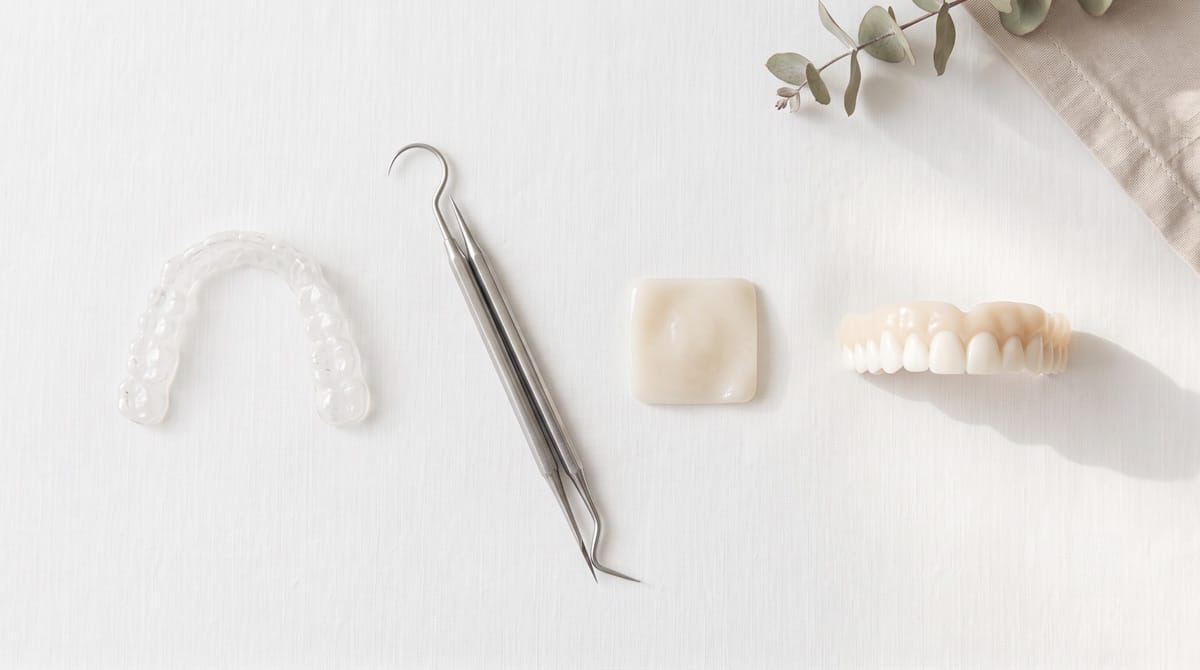
Clear aligners like Invisalign are one of the most effective ways to close small gaps permanently. They move your teeth gradually with a series of custom trays, no metal, barely visible, removable for meals.
The reality check: Most mild gap cases take 6–8 months. More complex cases can run 6–24 months. You'll need a dentist or orthodontist, and you'll need a retainer afterward (forever, honestly, if you want to keep the results). Cost runs $3,000–$8,000+ depending on your provider and the complexity of your case.
Great option if: You want a permanent fix and you're ready to invest the time and budget.
2. Dental Bonding
Dental bonding is the fastest clinical option for a single small gap. Your dentist applies a tooth-colored composite resin to the sides of your teeth, shapes it, and polishes it, all in one appointment. Most patients are in and out in under two hours.
The reality check: It's affordable (typically $300–$600 per tooth), but it's not permanent. Bonding can chip, stain, and usually needs to be replaced within 5–10 years. It also requires some skill, a good cosmetic dentist makes it look seamless; a less experienced one might not.
Great option if: You have one small gap, want fast results, and have a trusted cosmetic dentist.
3. Porcelain Veneers
Porcelain veneers are thin shells bonded permanently to the front of your teeth. They can close gaps, change shape, and whiten all at once. They look stunning when done well.
The reality check: This is the most expensive option ($1,000–$2,500+ per tooth), requires removing a thin layer of enamel (irreversible), and takes multiple appointments. You're committing for life.
Great option if: You want a complete smile transformation and you have the budget.
4. Snap-On Veneers (The Right-Now Solution)
This is where the conversation gets interesting, and honestly, where a lot of women land when they think through the logistics of the other options.
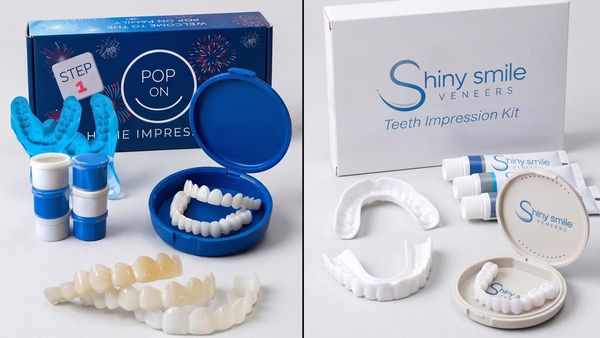
Snap-on veneers don't move your teeth. They cover them. Think of them like a custom-fitted cosmetic layer that clips over your existing teeth, instantly creating the appearance of a flawless, gap-free smile.
They won't replace orthodontics if that's your goal. But if you're in the decision-making phase, researching, saving, or just not ready for a clinical commitment, they give you something the other options can't: confidence right now.
We tested them ourselves, here's our full Shiny Smile Veneers review if you want the complete picture before deciding.
Side-By-Side Comparison
| Treatment | Cost | Timeline | Permanence | Dentist Required? |
|---|---|---|---|---|
| Clear Aligners | $3,000–$8,000+ | 6–24 months | Permanent (with retainer) | Yes |
| Dental Bonding | $300–$600/tooth | 1 visit | 5–10 years | Yes |
| Porcelain Veneers | $1,000–$2,500/tooth | 2–3 visits | Permanent (irreversible) | Yes |
| Snap-On Veneers | $499 (both arches) | ~3 weeks from order | Removable / long-term use | No |
FAQs: Small Gaps Between Teeth
Are small gaps between teeth normal? Yes. Diastema is a completely normal variation. In children, gaps often close naturally as adult teeth come in. In adults, it's almost always a cosmetic issue rather than a health one, unless gum disease is involved.
What's the fastest clinical way to fix a gap? Dental bonding is typically the quickest in-office option for a single small gap (under ~5mm). One appointment, same-day results.
Can a retainer close a small gap? Typically no, retainers maintain tooth position, they don't move teeth. In some limited cases a dentist might use a specific retainer design to close a very minor gap, but this isn't standard. Clear aligners are the correct tool for movement.
How long does Invisalign take for a gap? Simple gap closure often shows changes in 4–6 weeks, with most mild cases finishing around 6–8 months. More complex cases can take up to 24 months.
Can gum disease cause gaps? Yes. Periodontal disease can cause teeth to drift, which may create or widen gaps. If your gap is new or growing, see your dentist to rule this out.
Should I see a dentist about my gap? See a provider if: the gap is widening, you're experiencing gum bleeding, your teeth feel loose, or you want to explore permanent treatment. Otherwise, a gap alone isn't a dental emergency.
While You Decide: The Case for Snap-On Veneers
Here's the thing about closing a gap between your teeth permanently, it takes time, money, or both. Clear aligners require months of commitment. Bonding requires finding a skilled cosmetic dentist. Porcelain veneers are expensive and irreversible. None of that is a reason not to do it. But it's also not something most people do tomorrow.
And in the meantime? You still have a smile you're living with every day.
That's the gap (pun intended) that snap-on veneers fill really well. Not as a substitute for treatment, as a bridge. You wear them when you want to. You take them off when you don't. You feel confident at the job interview, the family photos, the first date, the reunion, right now, while you save up for Invisalign or research cosmetic dentists in your area.
Why Shiny Smile Veneers Specifically
There are several snap-on veneer brands out there. Shiny Smile Veneers consistently stands out for a few specific reasons worth naming:
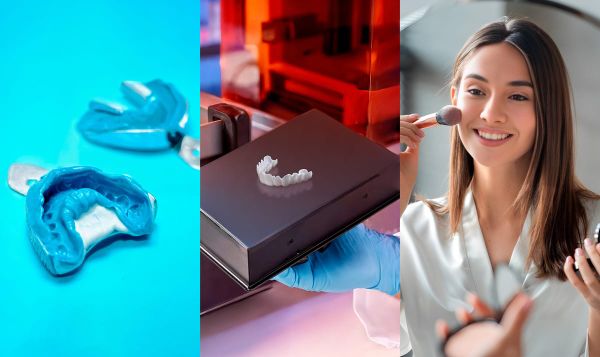
They're actually custom. You make impressions at home with their kit, send them in, and the veneers are fabricated to fit your teeth exactly, not a generic tray. That's the difference between something that looks natural and something that looks like a costume.
The material holds up. Most snap-on veneer complaints you'll find online are about discoloration and breakage. Shiny Smile offers a 2-year guarantee on color stability and a 1-year guarantee against fractures. For a product in this category, that's meaningful.
No dentist required. The whole process is done from home. No appointments, no injections, no drilling. For anyone who's been avoiding the dentist for any reason, anxiety, cost, access, this matters.
Real customers, real results. Their reviews consistently come back to two things: "they look so natural" and "I finally feel confident." One reviewer mentioned she went from never smiling with her teeth in photos to not being able to keep her mouth closed. That's the point.
Pricing that's actually accessible. Both upper and lower veneers at $499.99 as a one-time payment, or get one tray for $299.99. For context, one tooth of dental bonding often costs that much.

The Confidence Piece Nobody Talks About
Teeth are emotional. They affect whether you smile freely or guardedly. Whether you laugh with your mouth open or press your lips together in photos. Whether you feel fully present in moments or slightly removed from them.
That's not vanity. That's just how humans work.
Whatever path you choose, clear aligners, bonding, veneers, or none of the above, the goal is feeling like yourself. Confident. Unguarded. Present. Some women get there through orthodontic treatment. Some through cosmetic dentistry. Some through a custom snap-on set they slip on when they feel like it.
None of those answers is wrong. The only wrong answer is staying stuck because you think you don't deserve to feel good about your smile.
Bottom Line
Small gaps between teeth are normal, common, and almost always cosmetic. Your options are real, the technology has come a long way, and you have more control over your smile than you probably think.
Here's how to think about it:
- Ready to commit to a permanent fix? Start with a consultation for clear aligners or dental bonding.
- Want to explore but not ready to commit? Research providers, get quotes, take your time.
- Want to feel confident in your smile while you decide? Shiny Smile Veneers is worth a serious look.
You don't have to choose between "fix it eventually" and "love your smile now." You can do both.
Always consult a licensed dentist or orthodontist before beginning any treatment for gaps between teeth. Snap-on veneers are a cosmetic product, not an orthodontic treatment.