The Wedding Smile Checklist: Bleaching vs. Veneers — What Nobody Tells You
Planning your wedding smile? Compare professional teeth bleaching vs. snap-on veneers—costs, results, timelines, and what actually works on your big day.

Before you book that dental appointment, read this. The answer might surprise you, and save you a lot of money.
You've got the dress. You've found the venue. You've cried at no fewer than four cake tastings. And now you're standing in front of the bathroom mirror, phone in hand, searching "how to whiten teeth before wedding" at 11pm, because of course you are.
Welcome to the club. Your smile is going to be in approximately 400 photos, and suddenly, every mug of morning coffee you've ever had feels like a personal attack.
Here's the thing: there are two very different paths women take when they want a camera-ready smile before the big day, professional teeth bleaching and snap-on veneers, and almost nobody compares them honestly. Dentists sell you bleaching. Instagram sells you veneers. What you actually need is the full picture.
That's exactly what we're doing today. No fluff, no sales pitch, just a real breakdown of how both options work, what they cost, who they're right for, and which one might actually make sense for your situation.
First, What Is Professional Teeth Bleaching?
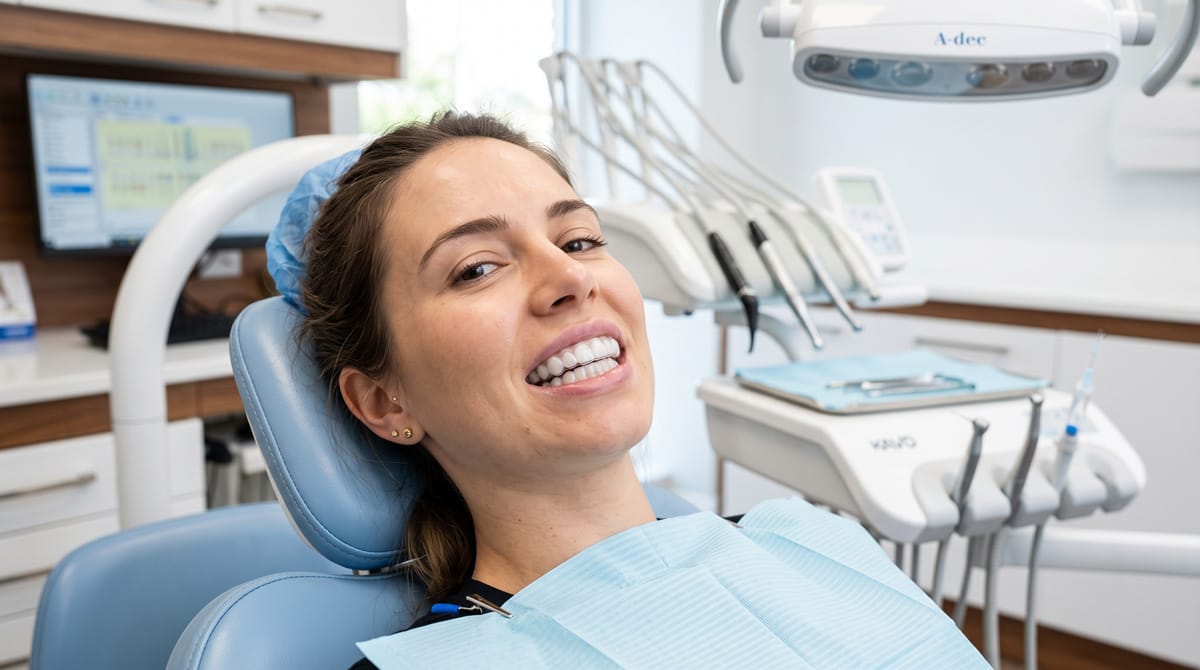
Professional bleaching, also called in-office whitening or dental bleaching, is exactly what it sounds like: a dentist applies a peroxide-based gel to your teeth, often activates it with a light or laser, and you walk out a few shades whiter than you walked in.
The most common in-office system is Philips Zoom, and at-home professional kits from brands like Opalescence are also prescribed by dentists for people who want to spread out the process over a few weeks. Either way, the active ingredient doing the heavy lifting is either hydrogen peroxide or carbamide peroxide.
How well does it actually work?
Honest answer? It depends entirely on what kind of staining you have. Bleaching works best on extrinsic stains, the surface-level discoloration caused by coffee, wine, tea, and tobacco. If your teeth are naturally yellow-ish from those years of daily lattes, you can realistically expect to go 3–8 shades lighter after one or two sessions.
But here's what your dentist might not lead with: bleaching does absolutely nothing on crowns, veneers, or fillings. If you have dental work on your visible teeth, those restorations won't budge. Your natural teeth whiten; the restorations stay exactly the same shade. You could end up with a more noticeable mismatch than when you started.
If you have any crowns, bonding, or existing porcelain veneers on your front teeth, bleaching won't touch them. This is one of the most common surprises women have going in. Ask your dentist about restoration compatibility before you book.
How long do results last?
This is where reality sets in. Professional bleaching results typically last 6 months to 2 years depending on your diet and habits. If you're drinking coffee every morning and red wine on weekends, and honestly, who isn't, you're probably looking at the shorter end of that range. Touch-up treatments become a recurring cost.
What does it cost?
In-office professional bleaching runs anywhere from $300 to $1,000+ per session, depending on your location and the system used. Take-home professional kits with custom trays are cheaper, typically $100–$400, but take longer to show results.
So What Are Snap-On Veneers, Exactly?
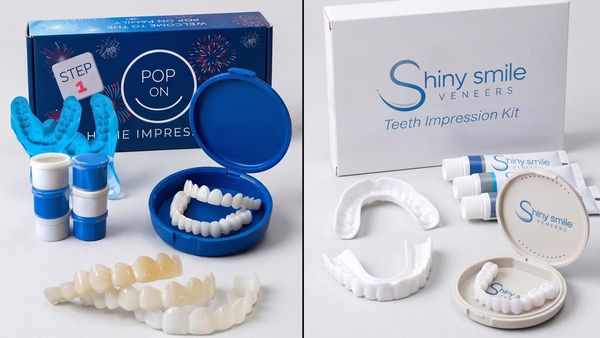
Snap-on veneers are custom-fit cosmetic appliances, made from a dental-grade resin, that clip over your existing teeth. You don't drill, you don't bond, you don't damage anything. You literally snap them on and snap them off.
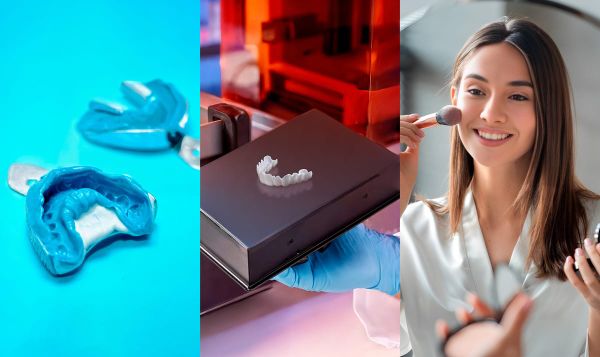
And before you picture some clunky novelty gag from the internet: modern custom veneers like Shiny Smile Veneers are a different animal entirely. They're made from impressions of your actual teeth, you do the impression kit at home and mail it in, so the fit is specific to you. The result is a natural-looking appliance that covers discoloration, minor gaps, chips, misalignment, and missing teeth simultaneously.
Think of it this way: bleaching changes the color of what you already have. Veneers give you an entirely new set to wear.
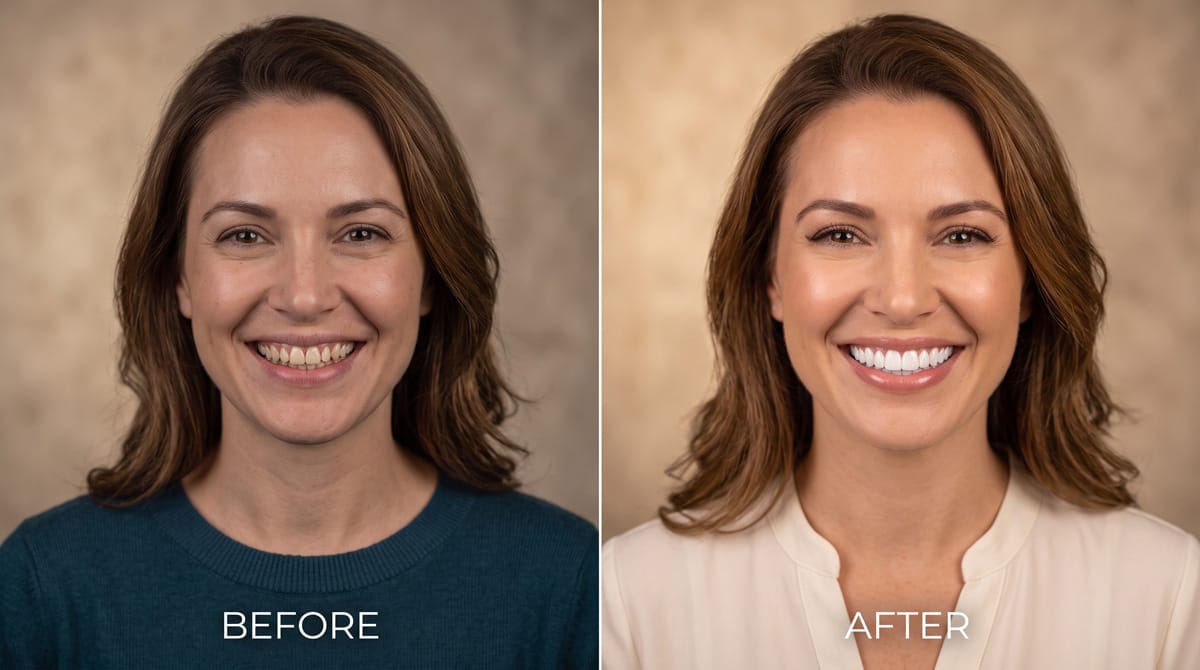
"Bleaching gets you whiter. Veneers get you perfect, and there's a meaningful difference between those two things on your wedding day."
The Head-to-Head: Bleaching vs. Veneers for Your Wedding
Alright, here's where we stop dancing around it. Let's put the two options side by side across every factor that actually matters when you're planning for a specific date.
| Factor | Professional Bleaching | Snap-On Veneers (Shiny Smile) |
|---|---|---|
| Cost | $300–$1,000+ per session | $499.99 one-time (or split trays) |
| How long results last | 6 months–2 years, fades with diet | Reusable, doesn't discolor |
| Works on crowns/fillings? | No, restorations won't whiten | Yes, covers all teeth uniformly |
| Fixes chips, gaps, misalignment? | No, color only | Yes, covers shape and gaps too |
| Sensitivity risk | Common, can last days after treatment | None |
| Dentist required? | Yes, multiple appointments | No, entire process done at home |
| Timeline | 1–3 sessions over several weeks | ~18 days from order to delivery |
| Good for sensitive teeth? | Can worsen sensitivity significantly | Yes, no chemical agents involved |
| Touch-ups needed? | Yes, ongoing cost every 6–12 months | No, clip on as needed |
| Can you eat with them? | Yes, after 48-hour food restriction post-treatment | Best to remove when eating (to preserve longevity) |
Who Should Choose Professional Bleaching?
Look, bleaching isn't a bad option, it's just a specific one. It makes the most sense if:
You have natural teeth with no restorations and mild-to-moderate staining from lifestyle. You're not trying to change the shape of your teeth at all. You have the budget, the timeline (6–8 weeks minimum before the wedding), and you don't have a history of sensitivity. And you're okay with committing to a maintenance routine afterward.
If that's you? Bleaching can deliver genuinely beautiful results. A system like Philips Zoom in-office, or Opalescence take-home trays from your dentist, are solid, proven options.
Schedule your final whitening session at least 2 weeks before the wedding, not the day before. Bleached teeth can look slightly translucent or gray immediately after treatment, and you want the color to settle. Plus, sensitivity peaks in the first 48 hours post-treatment, and you do not want that on your wedding weekend.
Who Should Skip Bleaching and Go Straight to Veneers?
This is where it gets interesting, and this is the part most wedding planning content glosses over entirely.
You might be a much better candidate for snap-on veneers if any of the following sound like you:
You have dental restorations on visible teeth. Crowns, bonding, existing porcelain veneers, bleaching won't touch them, and you could walk into your wedding with a noticeably two-toned smile. Snap-on veneers cover everything uniformly.
You have sensitive teeth. Peroxide-based bleaching is notorious for triggering sensitivity, sometimes for days. If cold water already makes you wince, this is a miserable experience to have in the weeks leading up to the most photographed day of your life.
You want to address more than just color. Maybe your teeth are white enough but there's a small gap, a chipped front tooth, or minor crowding that's been in the back of your mind for years. Bleaching fixes exactly one thing. Veneers fix several simultaneously.
You're working with a tighter timeline or budget. Shiny Smile Veneers delivers in roughly 18 days and runs $499.99 total, less than a single in-office bleaching session in most major cities. If the wedding is coming up fast, there's no waiting for multiple appointments.
You want something reusable. This is the sleeper advantage nobody talks about. After the wedding, you still have them. Anniversary photos. Holiday parties. Job interviews. The investment keeps paying off.
If you're weighing your options, our full Shiny Smile Veneers review covers exactly what to expect from the ordering process to the final fit.
Frequently Asked Questions
How long does professional teeth bleaching last?
Results typically last 6 months to 2 years depending on your diet and oral habits. Coffee, wine, and tea all accelerate fading. Most people need touch-up treatments every 6–12 months to maintain results.
Does teeth bleaching cause sensitivity?
It's one of the most common side effects, roughly 38% of people experience some degree of tooth sensitivity after whitening. It usually resolves within 48 hours but can be intense, especially if you already have sensitive teeth. Sensodyne toothpaste in the weeks leading up to your treatment can help, but it doesn't eliminate the risk.
Does bleaching work on crowns, veneers, or fillings?
No. Bleaching only works on natural tooth enamel. Crowns, bonding, and porcelain veneers will not change color, which can actually create a more noticeable contrast if your natural teeth whiten significantly around them.
What should I avoid after bleaching?
For at least 48 hours after treatment, avoid anything that would stain a white shirt: coffee, red wine, tea, dark berries, tomato sauce, soy sauce. Your enamel's pores are temporarily more open after treatment and will absorb stains more easily. A lot of dentists call this the "white diet" window.
How many sessions does professional bleaching take?
For in-office treatment, one session is often enough for moderate staining, though some people do two. At-home professional kits with custom trays typically take 2–4 weeks of nightly wear to reach optimal results. Start at least 6–8 weeks before your wedding to have buffer time.
Can snap-on veneers fix gaps and chips, not just color?
Yes, and this is the core difference from bleaching. Custom snap-on veneers like Shiny Smile Veneers are molded to cover the full visible surface of your teeth, which means gaps, chips, minor misalignment, and discoloration are all addressed in one solution. Bleaching only addresses color.
How long does it take to get custom snap-on veneers?
Shiny Smile Veneers operates on roughly an 18-day turnaround from the time you mail back your impression kit. You'll want to order at least a month before your wedding to give yourself time for any fit adjustments and a few days of practice wearing them so they feel natural by the time you walk down the aisle.
Can I bleach my teeth if I have sensitive teeth?
It's not impossible, but it carries higher risk. Dentists often recommend desensitizing toothpaste pre-treatment and lower-concentration peroxide formulas to reduce discomfort. Alternatively, Sensodyne Extra Whitening is a gentler option, though results are more gradual. If sensitivity is a real concern, snap-on veneers sidestep the problem entirely since no peroxide is involved.
How much does professional bleaching cost?
In-office professional whitening typically runs $300–$1,000 per session depending on the system and location. Professional take-home kits from your dentist are cheaper, usually $100–$400. OTC strips like Crest 3D Whitestrips are $30–$70, but results are more modest and take longer. Shiny Smile Veneers come in at $499.99 as a one-time cost (or split trays), which positions them in the same ballpark as one good in-office bleaching session, but with results that don't fade.
The Bottom Line
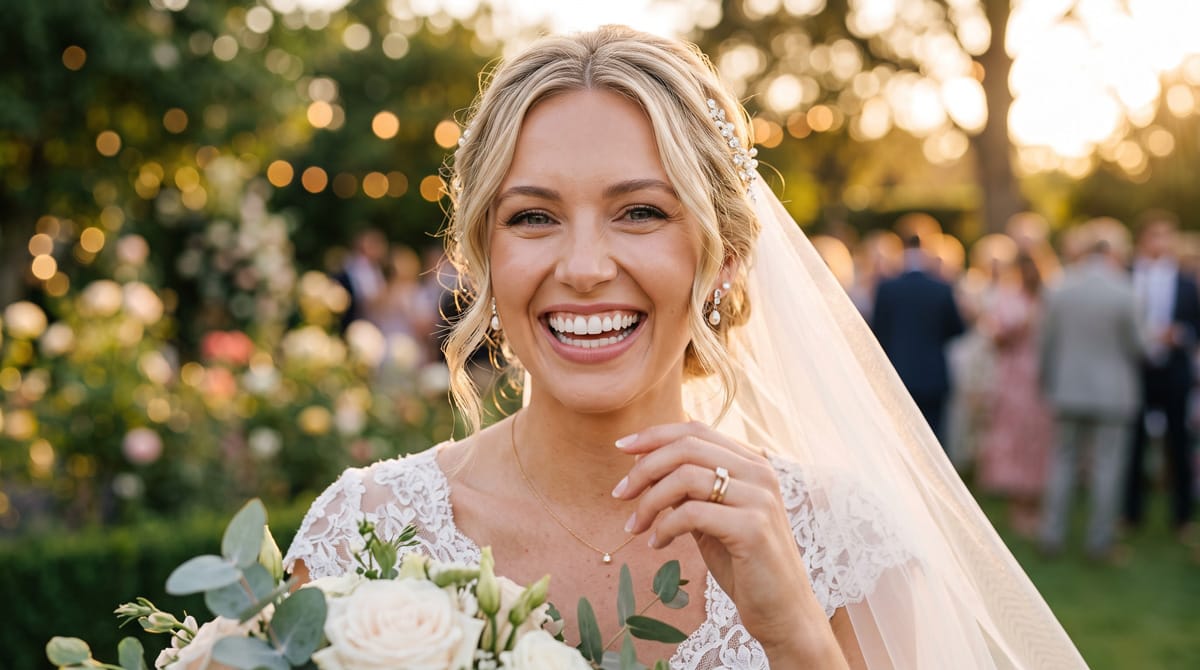
Your wedding smile shouldn't fade with your coffee habit.
If you want whiter teeth and you have no restorations, no sensitivity issues, plenty of time, and a dental budget, professional bleaching works. But if you want perfect teeth, uniform, bright, gap-free, chip-free, and still looking great in your anniversary photos, Shiny Smile Veneers might be the smarter call. One custom fit, no dentist required, and about the same price as one round of in-office whitening.
Your wedding day is one of those moments that lives in photos forever, and you deserve to love every single smile you see. Whether you go the bleaching route or decide custom veneers make more sense for you, you're investing in your confidence. That part? Completely non-negotiable.
Now go enjoy that next cake tasting. You've earned it.